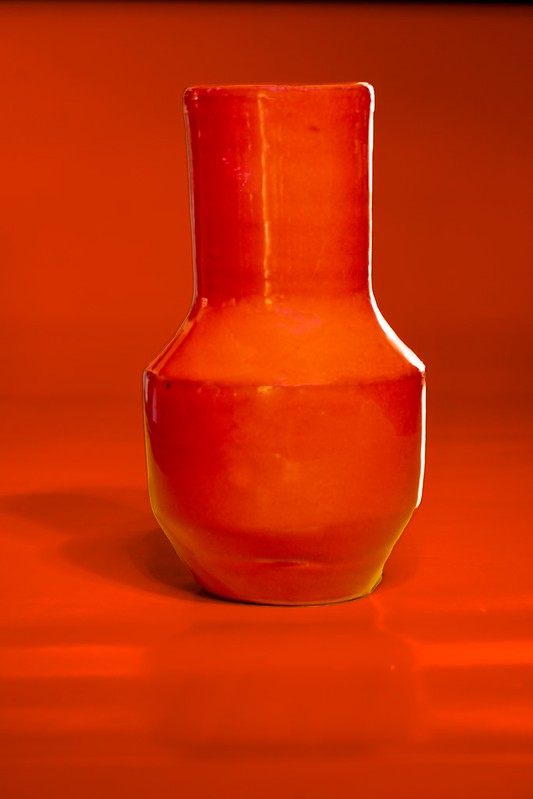
This image is a study in monochromatic intensity and intentional optical manipulation. The subject is a vintage vase finished in a rich, orange uranium glaze—a material known for its unique interaction with light. To elevate this piece beyond a standard product shot, the entire scene was bathed in a uniform orange palette, matching the background perfectly to the ceramic surface. This creates a striking, minimalist color field where form and light take absolute precedence over contrast.
The defining characteristic of this photograph is its radiant, ethereal quality, achieved entirely through traditional photographic techniques. While modern digital workflows often rely on post-processing filters to simulate luminosity, this glow was crafted organically at the moment of capture. By setting the Leica 60mm TL APO-Macro lens to f/32, the shot intentionally introduces diffraction. Typically avoided by photographers seeking absolute pixel-level sharpness, this optical phenomenon is leveraged here as a creative tool. The scattering of light across the sensor softens the harsh boundaries of the vase, creating a natural, glowing aura that emanates from the ceramic body itself.
Complementing this tight aperture is a precise light-painting technique executed during a single exposure. Moving the light source manually across the form accentuates its curves, giving the vase a sense of volume and three-dimensional presence against the flat background. There are no digital shortcuts, compositing, or focus stacking used here. It is an honest, technical calculation that demonstrates how understanding the physics of a lens can yield publication-ready commercial assets directly from the camera. The result is a bold, abstract piece that honors the heritage of the object through meticulous studio craft